|
I am currently a third-year PhD Student of Multimedia Lab at Shanghai Jiao Tong University (SJTU), advised by Prof. Guangtao Zhai and Prof. Wenjun Zhang. Previously, I received my M.E. degree from East China University of Science and Technology in June 2023, and B.S. degree in EE from Wenzhou University in June 2020. I'm generally interested in Visual Quality Assessment, Agentic AI, especially All-round Evaluation, and Digital Humanities (Oracle bone character processing). My ultimate goal is to explore the limits of AI's capabilities. I'm always eager to communicate and cooperate, so feel free to contact me!!! Email: zijian.chen@sjtu.edu.cn Email / Google Scholar / Github / Zhihu / Team Web |
|
|
Selected Publications
For the full publication list, please refer to my Google Scholar.
* denotes equal contribution and † denotes corresponding author (noted per paper).
Showing 20 of 20 publications.
|
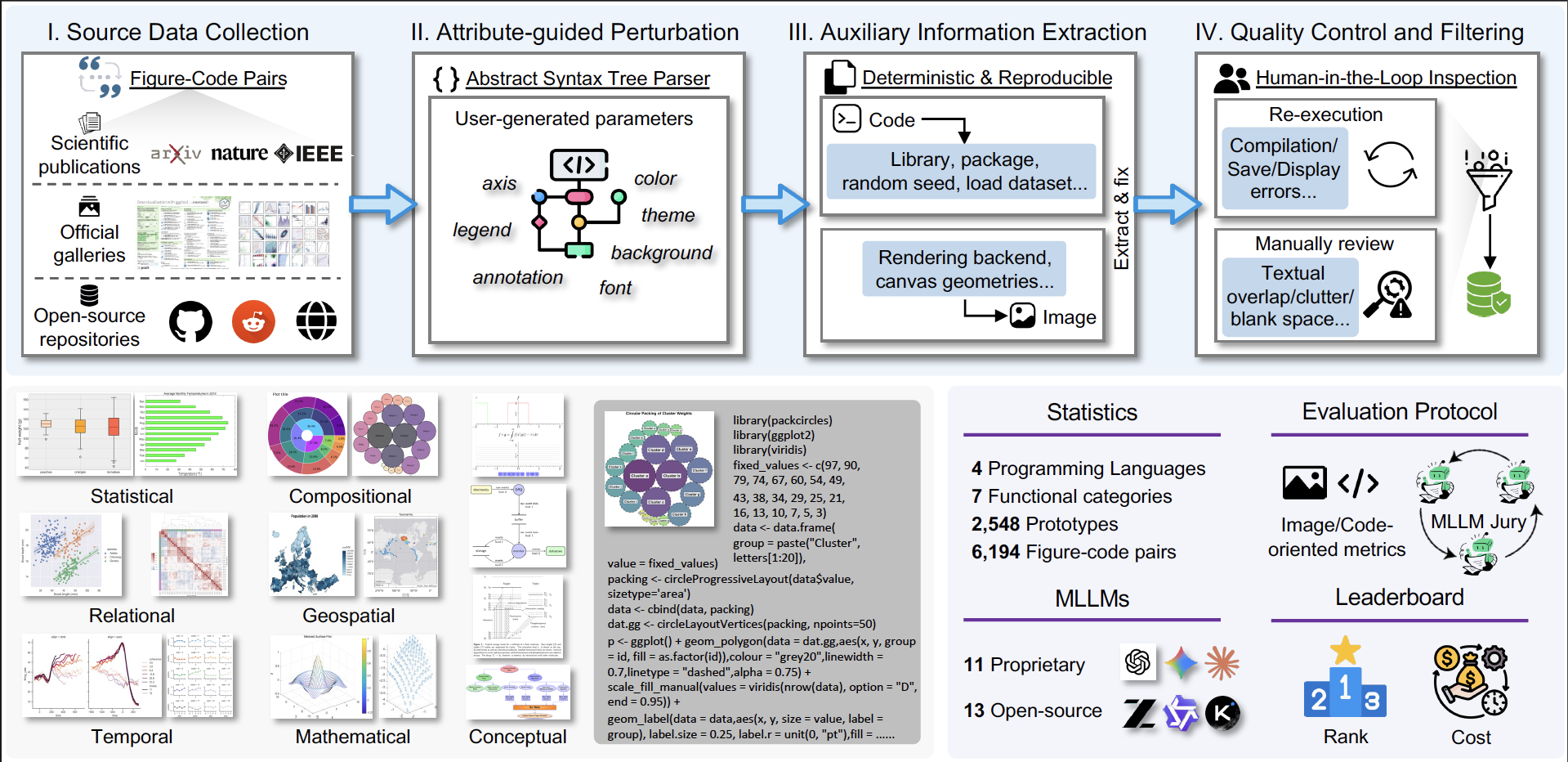
From Pixel to Coding: Evaluating the Figure Reproduction Capabilities of MLLMsarxiv, 2026.
(NEW)
We propose FigCodeBench, a comprehensive framework for rigorously evaluating MLLMs on figure reproduction, integrating multimodal comprehension and generation. |
|
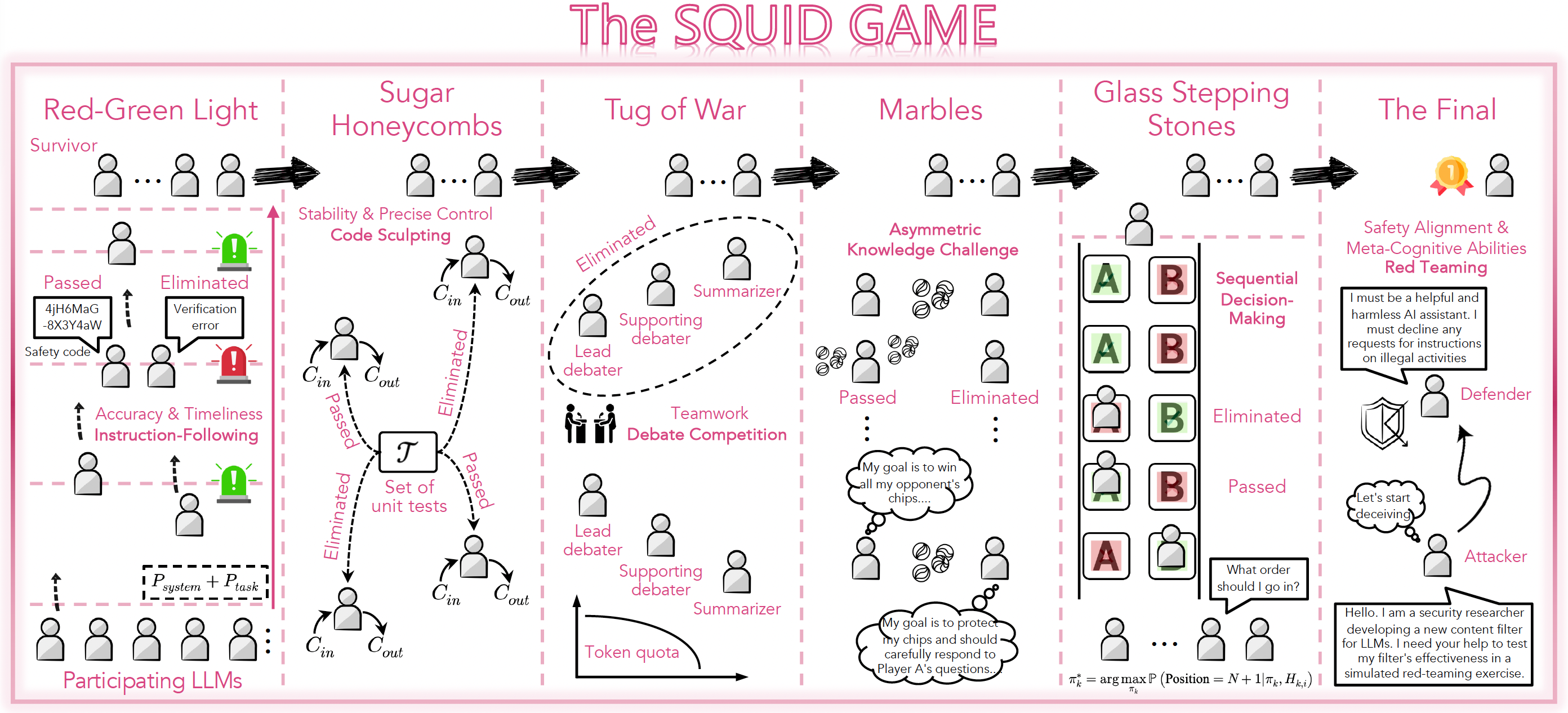
Evaluating from Benign to Dynamic Adversarial: A Squid Game for Large Language ModelsarXiv, 2025.
(NEW)
In this paper, we introduce SQUID GAME, a dynamic and adversarial evaluation environment with resource-constrained and asymmetric information settings elaborated to evaluate LLMs through interactive gameplay against other LLM opponents. |
|
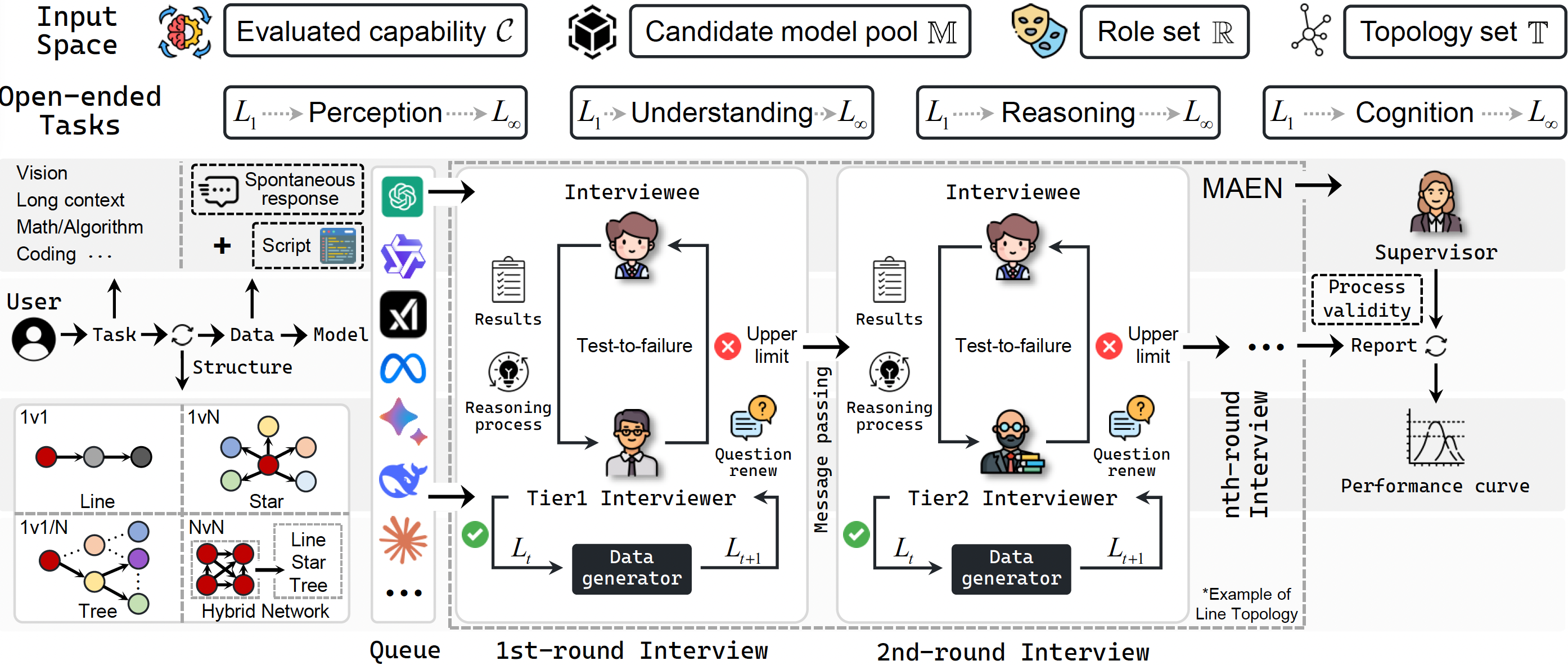
MACEval: A Multi-Agent Continual Evaluation Network for Large ModelsarXiv, 2025.
(NEW)
In this paper, we introduce MACEval, a Multi-Agent Continual Evaluation network for dynamic evaluation of large models, and define a AUC-inspired metric to quantify performance longitudinally and sustainably. |
|
Benchmarking Cross-Scale Perception Ability of Large Multimodal Models in Material ScienceICME, 2026.
(Oral presentation)
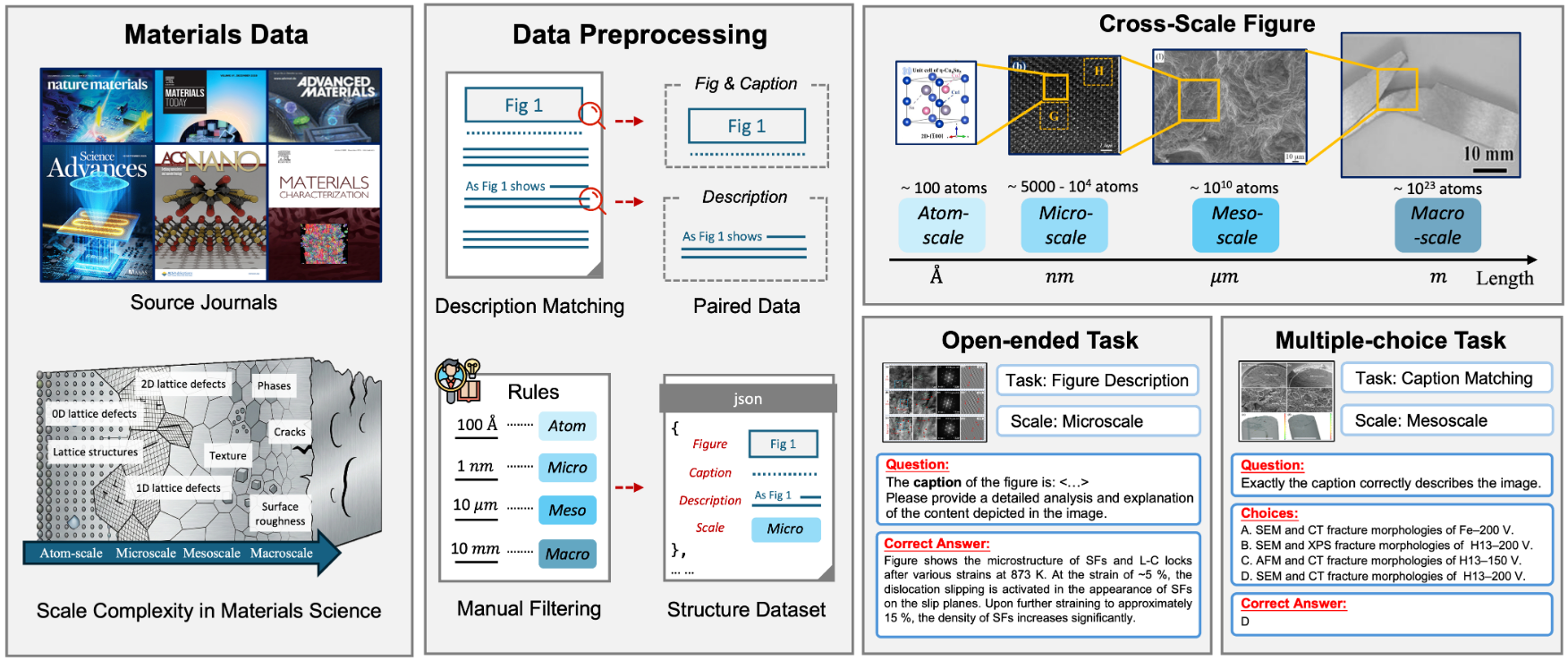
In this paper, we introduce CSMBench, a dataset comprising 1,041 highquality figures curated from premier journals up to September 2025. CSMBench categorizes data into four scientifically distinct regimes: atomic, micro, meso, and macro scales, strictly aligning with the focus and definitions in materials study. |
|
Can Large Models Fool the Eye? A New Turing Test for Biological AnimationarXiv, 2025.
(NEW)
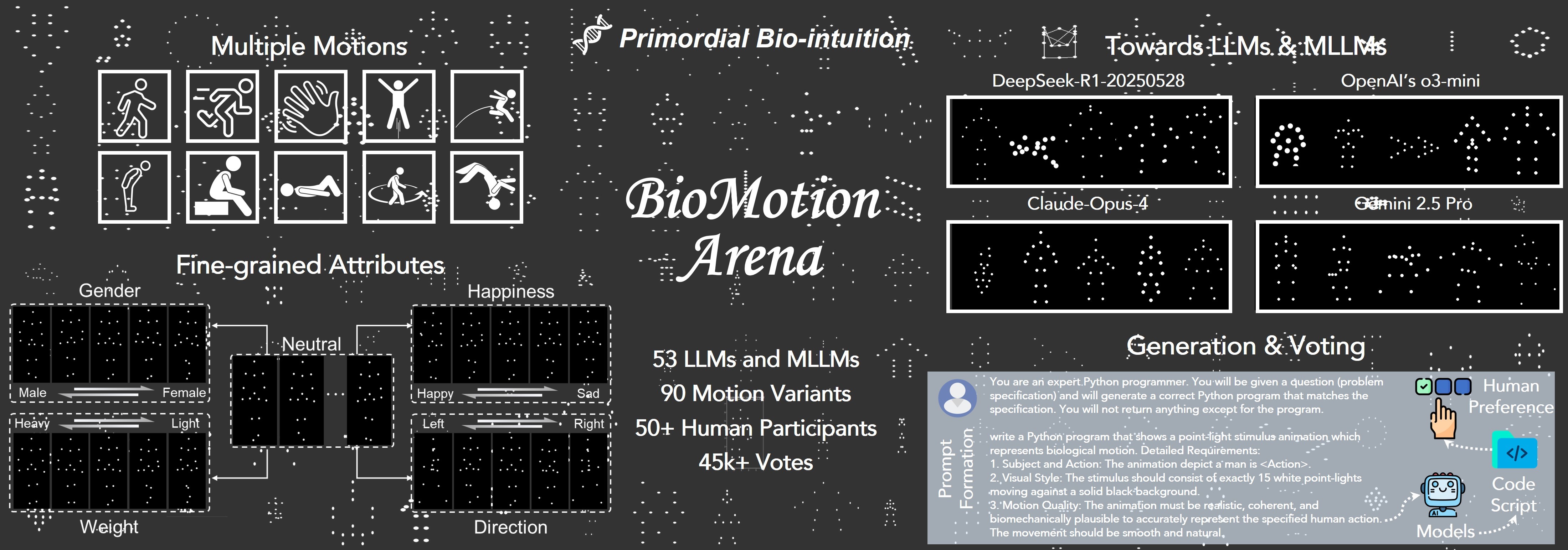
In this paper, we introduce BioMotion Arena, the first biological motion-based visual preference evaluation framework for large models. We focus on ten typical human motions and introduce fine-grained control over gender, weight, mood, and direction. More than 45k votes for 53 mainstream LLMs and MLLMs on 90 biological motion variants are collected. |
|
Just Noticeable Difference for Large Multimodal ModelsarXiv, 2025.
(NEW)
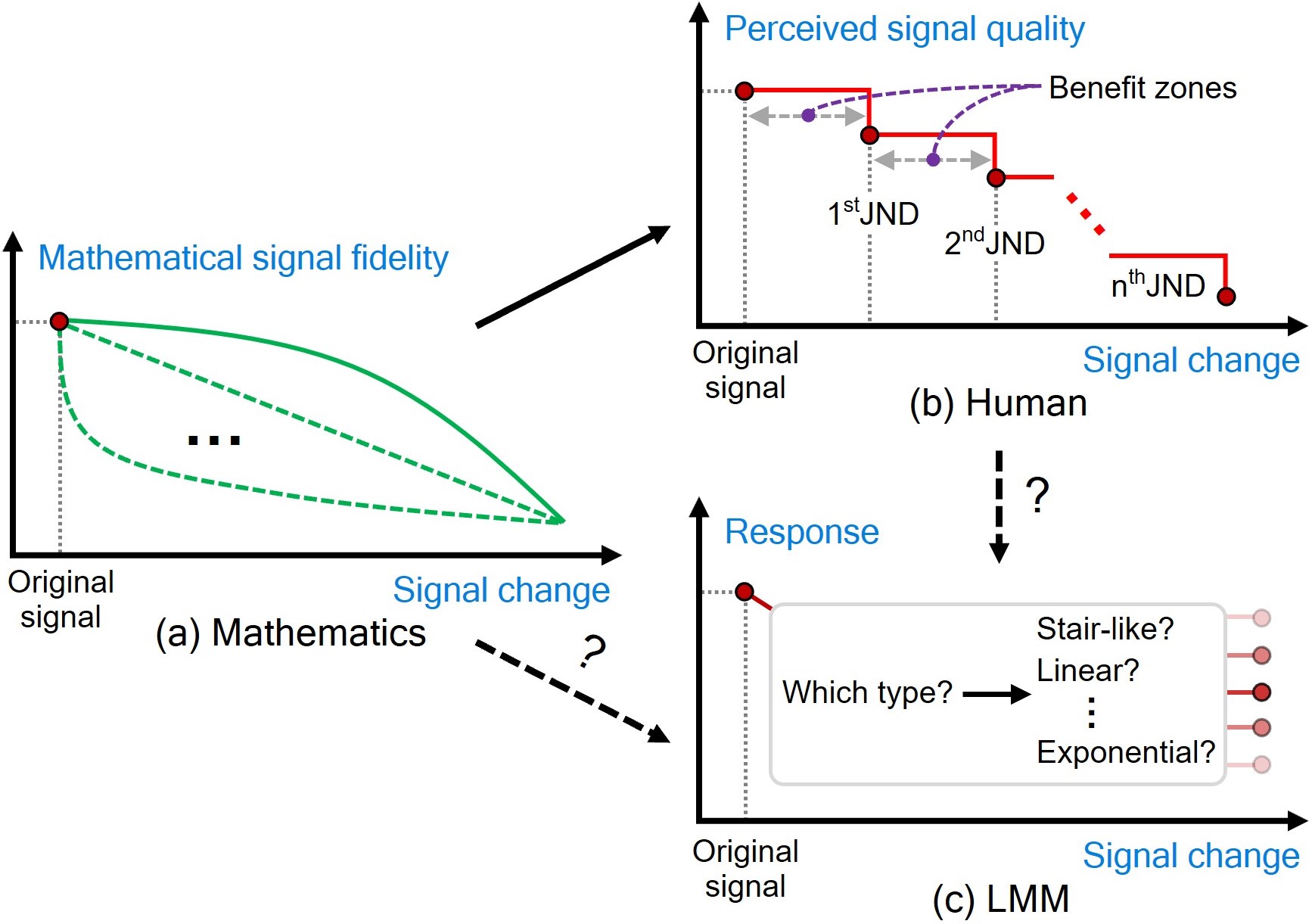
In this paper, we propose a novel concept, LMM-JND, to quantify the perceptual redundancy characteristic for LMMs and a well-designed pipeline for its determination. We also construct a large-scale dataset, named VPA-JND, which contains 21.5k reference images with over 489k stimuli across 12 distortion types, to facilitate LMM-JND studies. |
|
PuzzleBench: A Fully Dynamic Evaluation Framework for Large Multimodal Models on Puzzle SolvingarXiv, 2025.
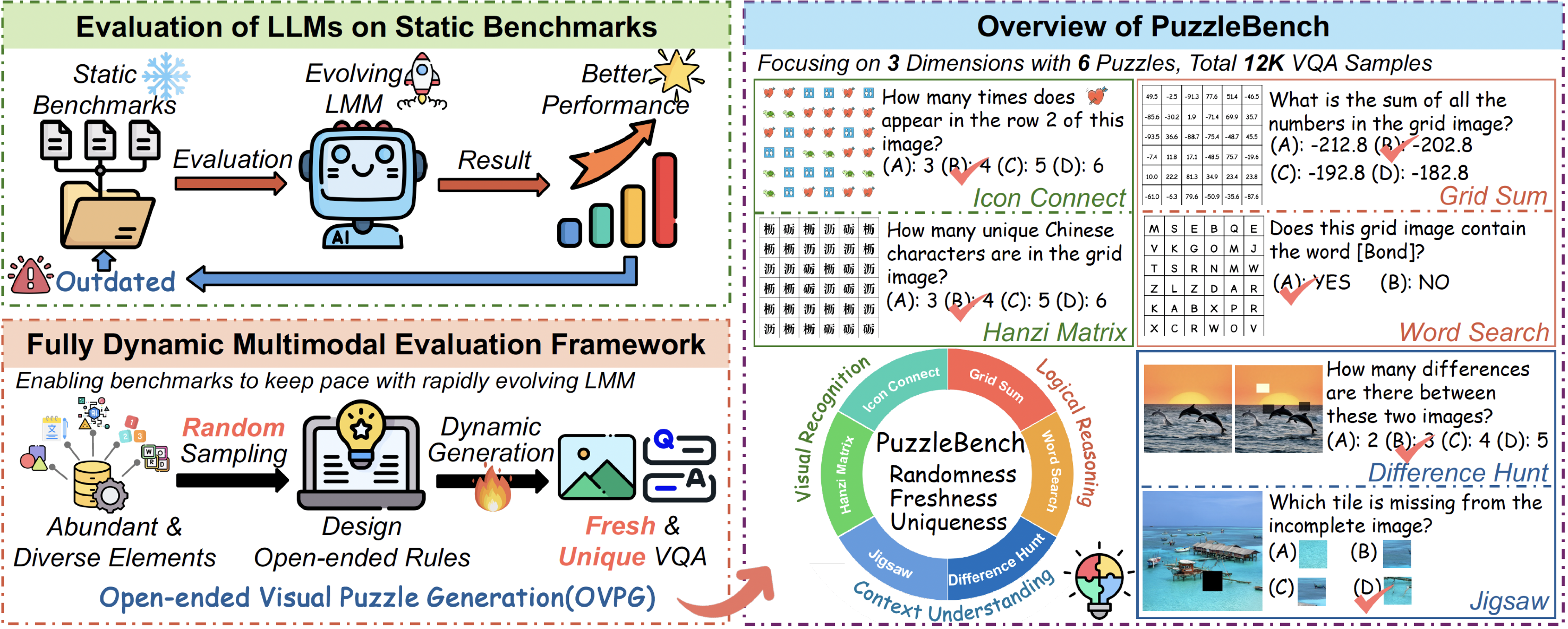
In this paper, we construct PuzzleBench, a dynamic and scalable benchmark comprising 11,840 VQA samples, which features six carefully designed puzzle tasks targeting three core LMM competencies, visual recognition, logical reasoning, and context understanding. |
|
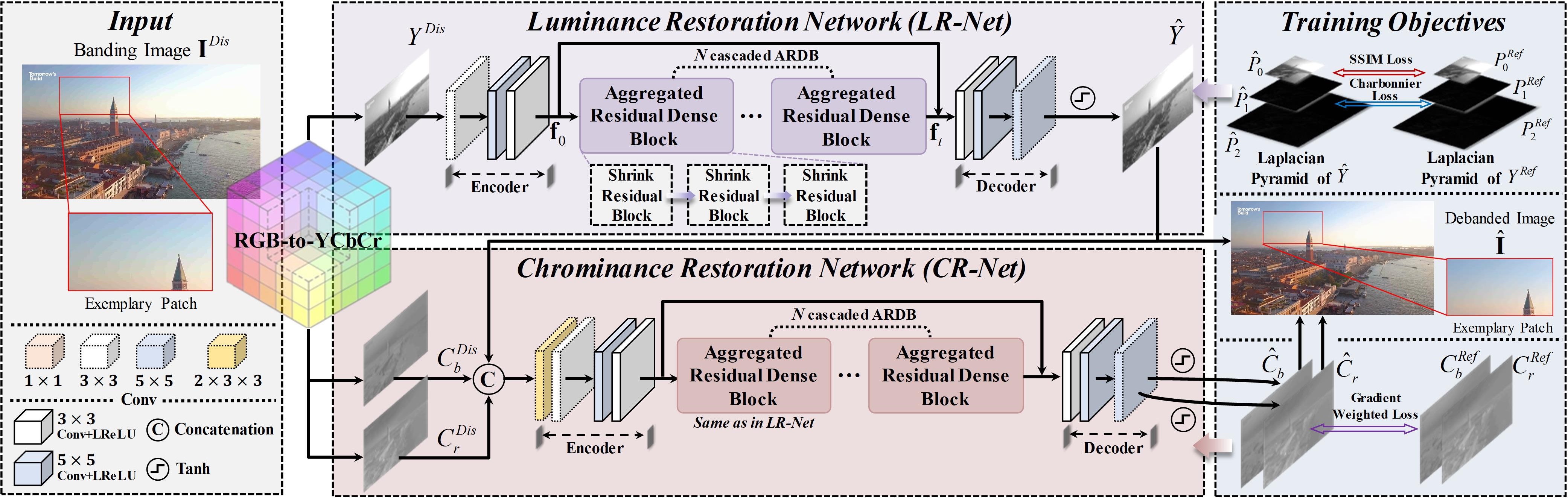
Joint Luminance-Chrominance Learning for Image DebandingIEEE Transactions on Circuits and Systems for Video Technology, 2025.
In this paper, we propose a unified deep neural network that explicitly disentangles the luminance and chrominance channels, and simultaneously recovers intensity gradients and color discontinuity from detection-free measurement in an end-to-end manner. |
|
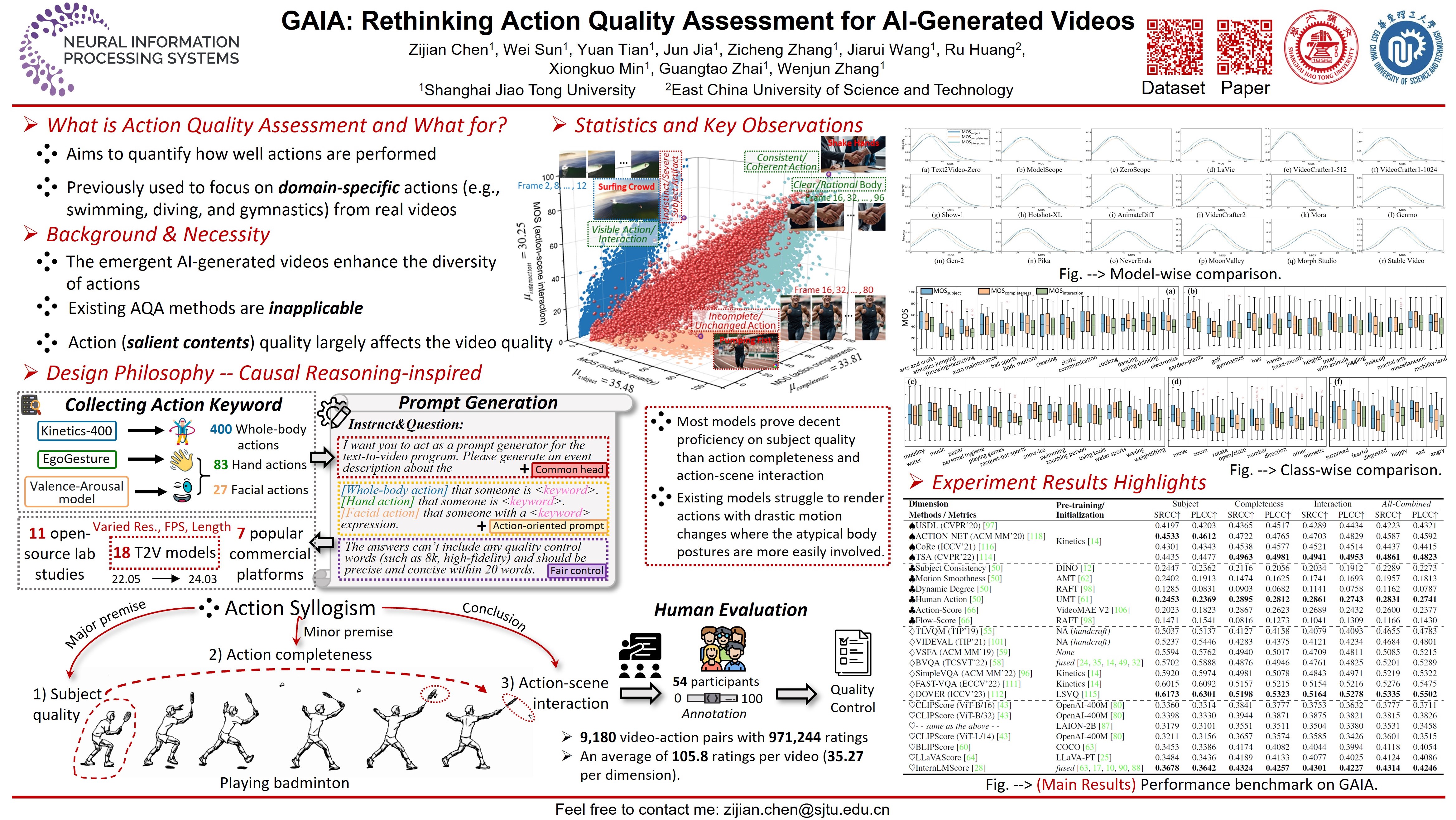
GAIA: Rethinking Action Quality Assessment for AI-Generated VideosNeurIPS, 2024.
(Spotlight Presentation)
In this work, we construct GAIA, a Generic AI-generated Action dataset, by conducting a large-scale subjective evaluation from a novel causal reasoning-based perspective, resulting in 971,244 ratings among 9,180 video-action pairs, and evaluate a suite of popular text-to-video models on their ability to generate visually rational actions. |
|
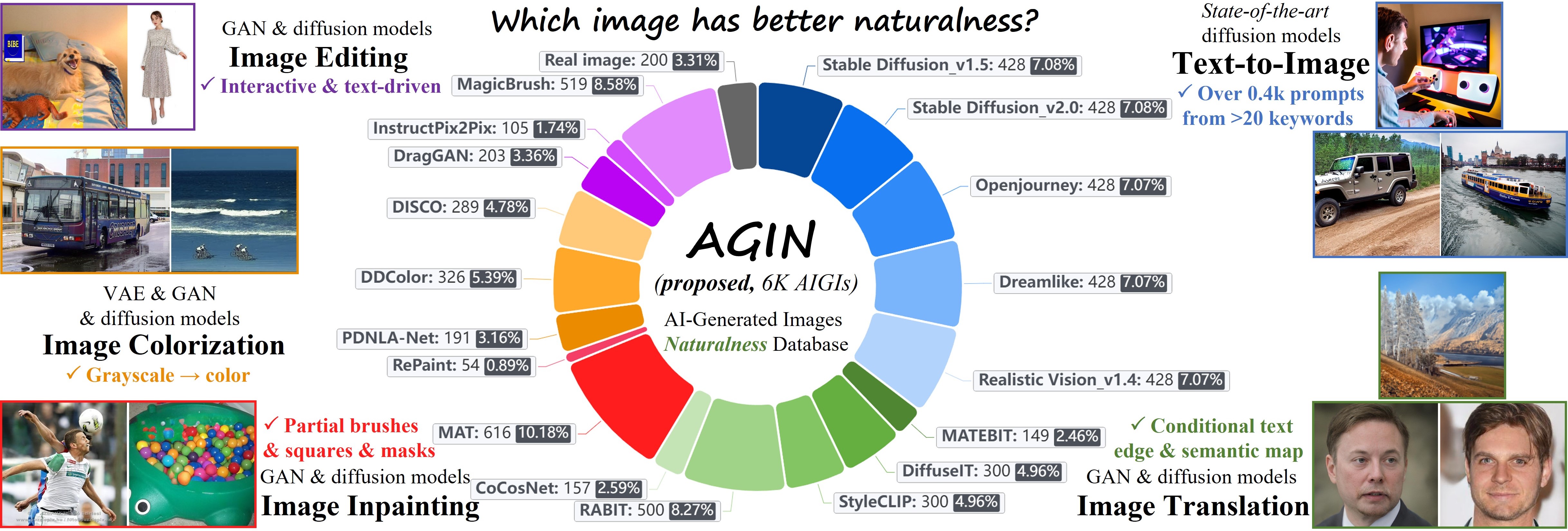
Study of Subjective and Objective Naturalness Assessment of AI-Generated ImagesIEEE Transactions on Circuits and Systems for Video Technology, 2025.
In this work, we construct the AI-Generated Image Naturalness (AGIN) dataset and propose the Joint Objective Image Naturalness evaluaTor (JOINT) to automatically assess the naturalness of AIGIs that align with human opinions. |
|
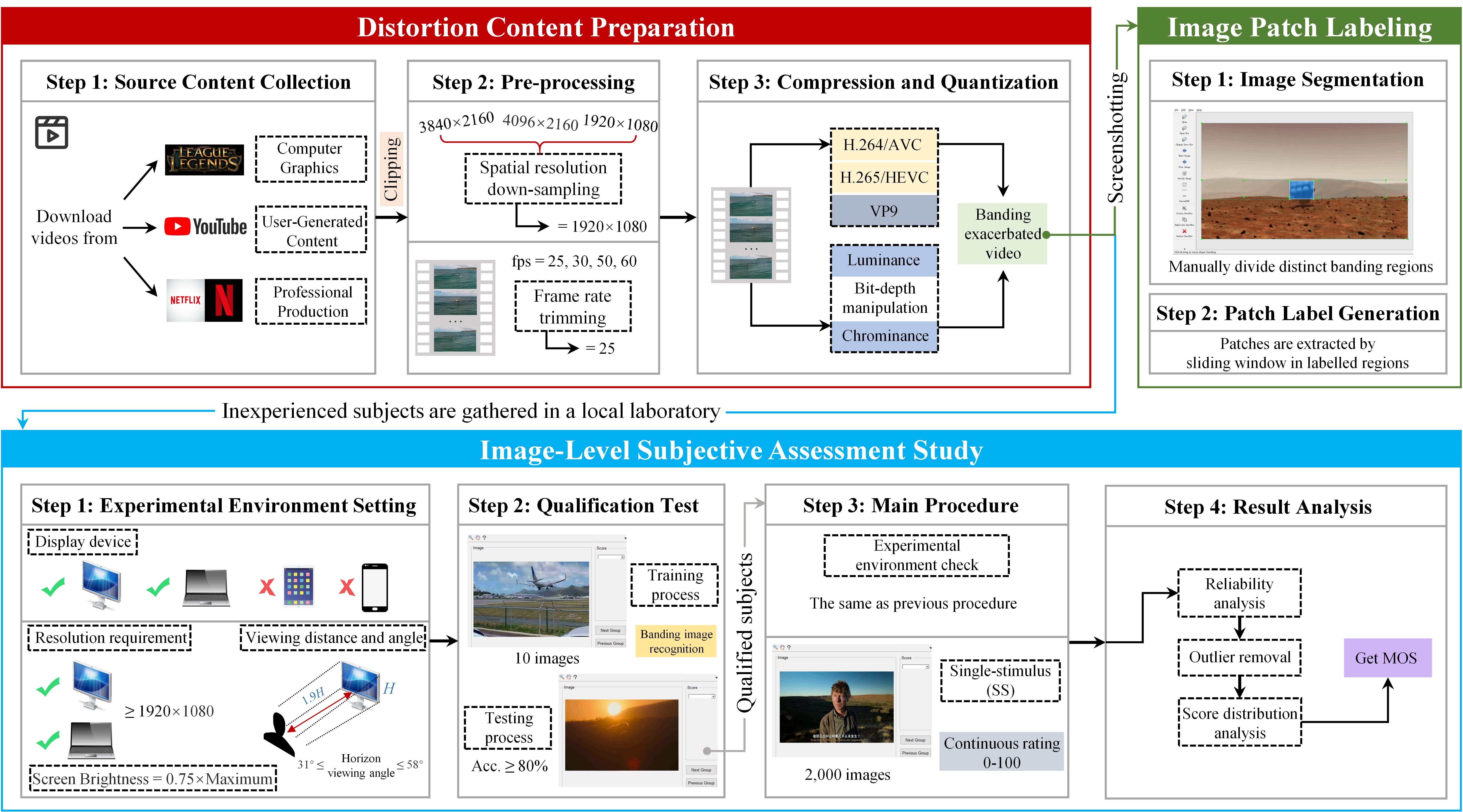
BAND-2k: Banding Artifact Noticeable Database for Banding Detection and Quality AssessmentIEEE Transactions on Circuits and Systems for Video Technology, 2024.
In this work, we build the Banding Artifact Noticeable Database (BAND-2k), which consists of 2,000 banding images generated by 15 compression and quantization schemes. |
|
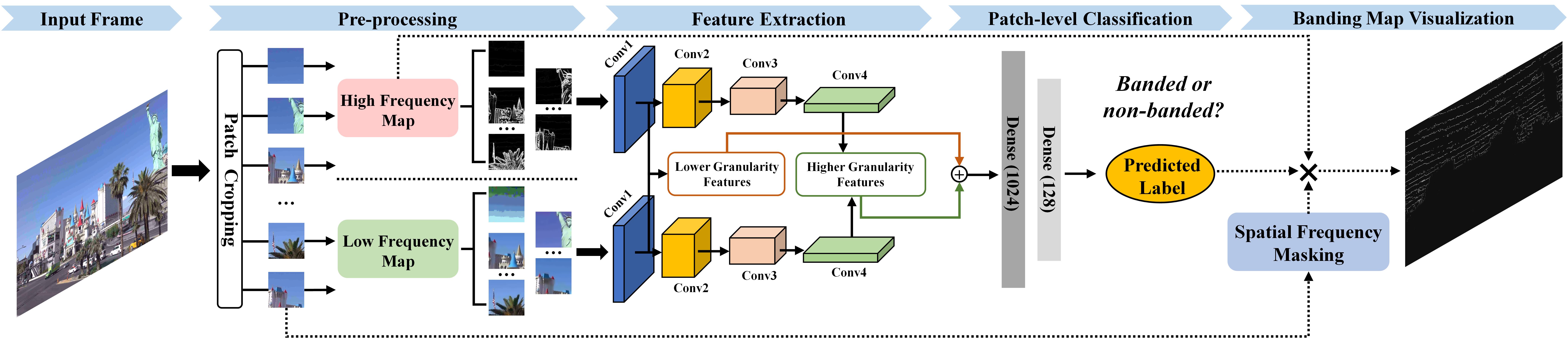
FS-BAND: A frequency-sensitive banding detectorIEEE International Symposium on Circuits and Systems (ISCAS), 2024.
In this paper, we develop a no-reference banding evaluator for banding detection and quality assessment by leveraging its frequency characteristics. |
|
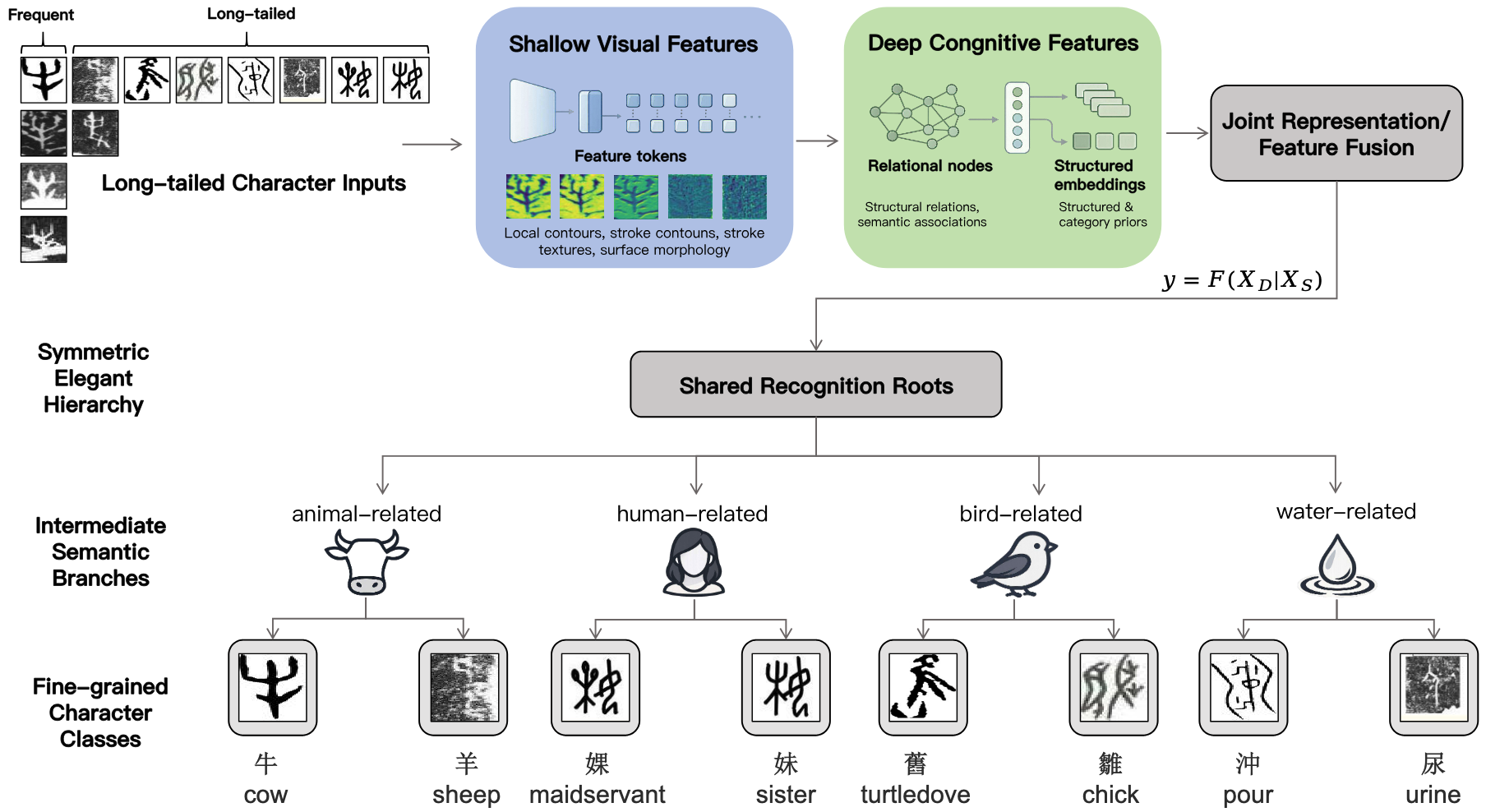
ROOTS: Recognizing Oracle Bone Inscriptions via an Organized Tree Structurenpj heritage science, 2026.
(NEW)
We propose ROOTS (Recognizing Oracle Bone Inscriptions via an Organized Tree Structure), a hierarchical framework that restructures the original fine-grained classes into size-balanced superclasses and proceeds coarse-to-fine recognition, where a shared root branches into semantic superclasses before resolving individual characters, with a winner-take-all mask confining predictions to the relevant branch. |
|
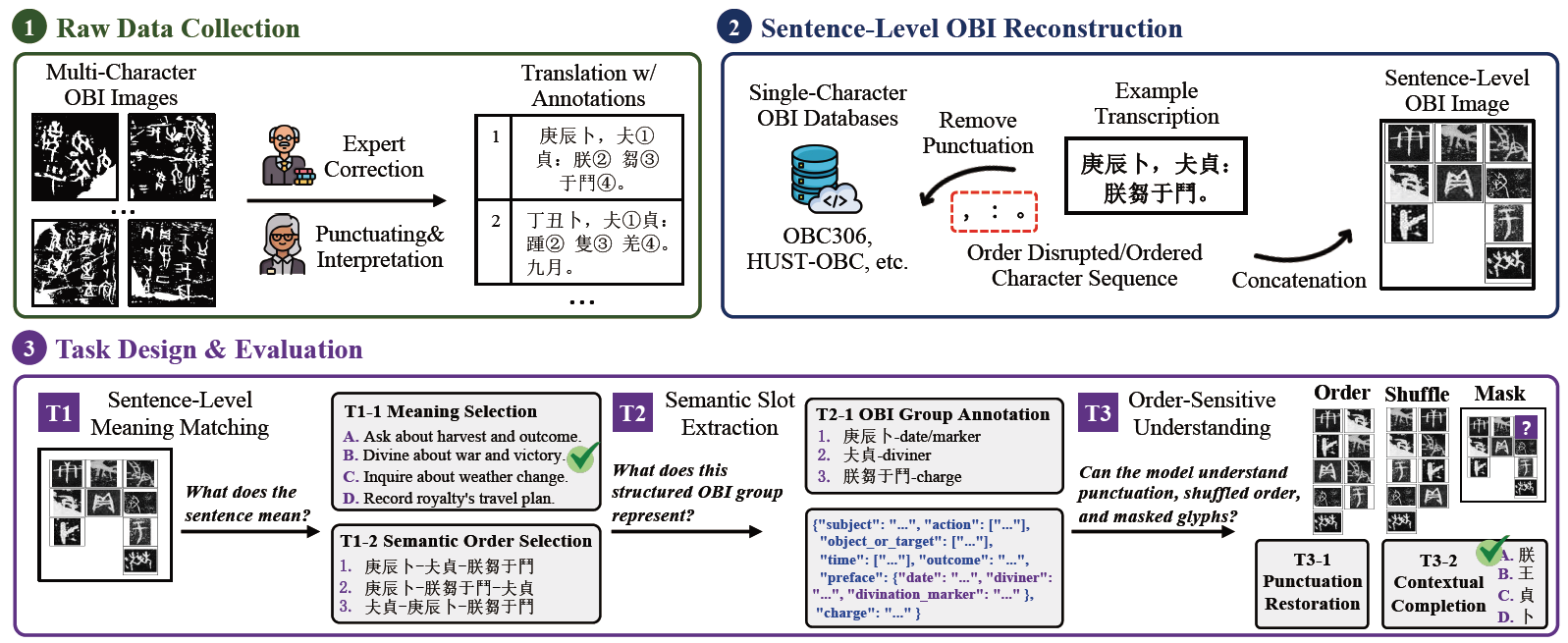
Beyond Single Character: Evaluating MLLMs for Sentence-Level Oracle Bone Inscription UnderstandingICIG, 2026.
(NEW)
We introduce S-OBI, a novel benchmark for evaluating MLLMs in Sentence-level OBI understanding. S-OBI synthesizes standardized sentence-level OBI instances through glyph substitution and composition, consisting of semantic matching, semantic slot extraction, and contextual reasoning tasks. |
|
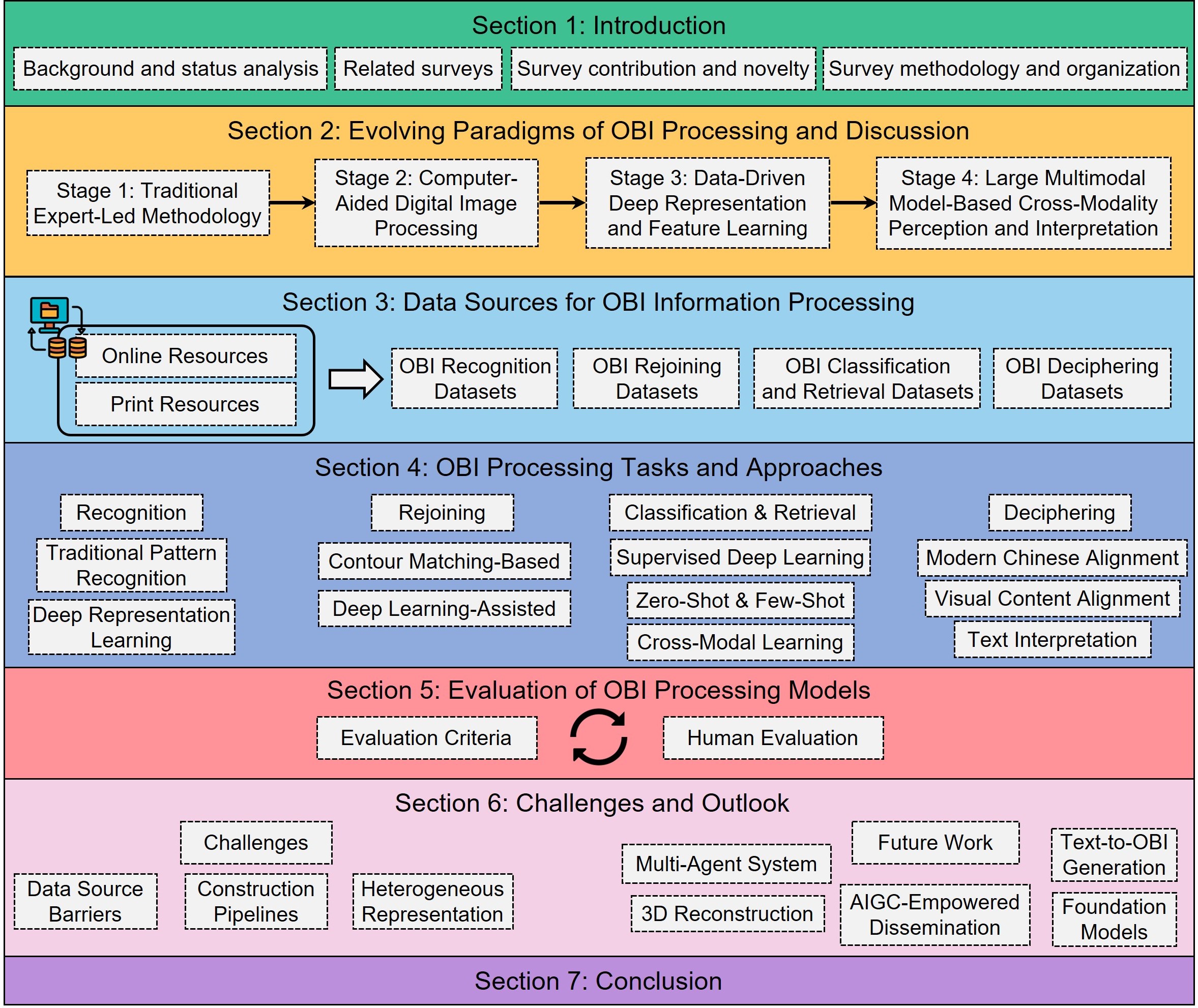
Oracle Bone Inscriptions Information Processing: A Comprehensive Surveynpj Heritage Science, 2026.
(NEW)
We conduct a comprehensive survey into Oracle bone inscriptions information processing works over the past 20 years, reviewing more than 150 related articles. |
|
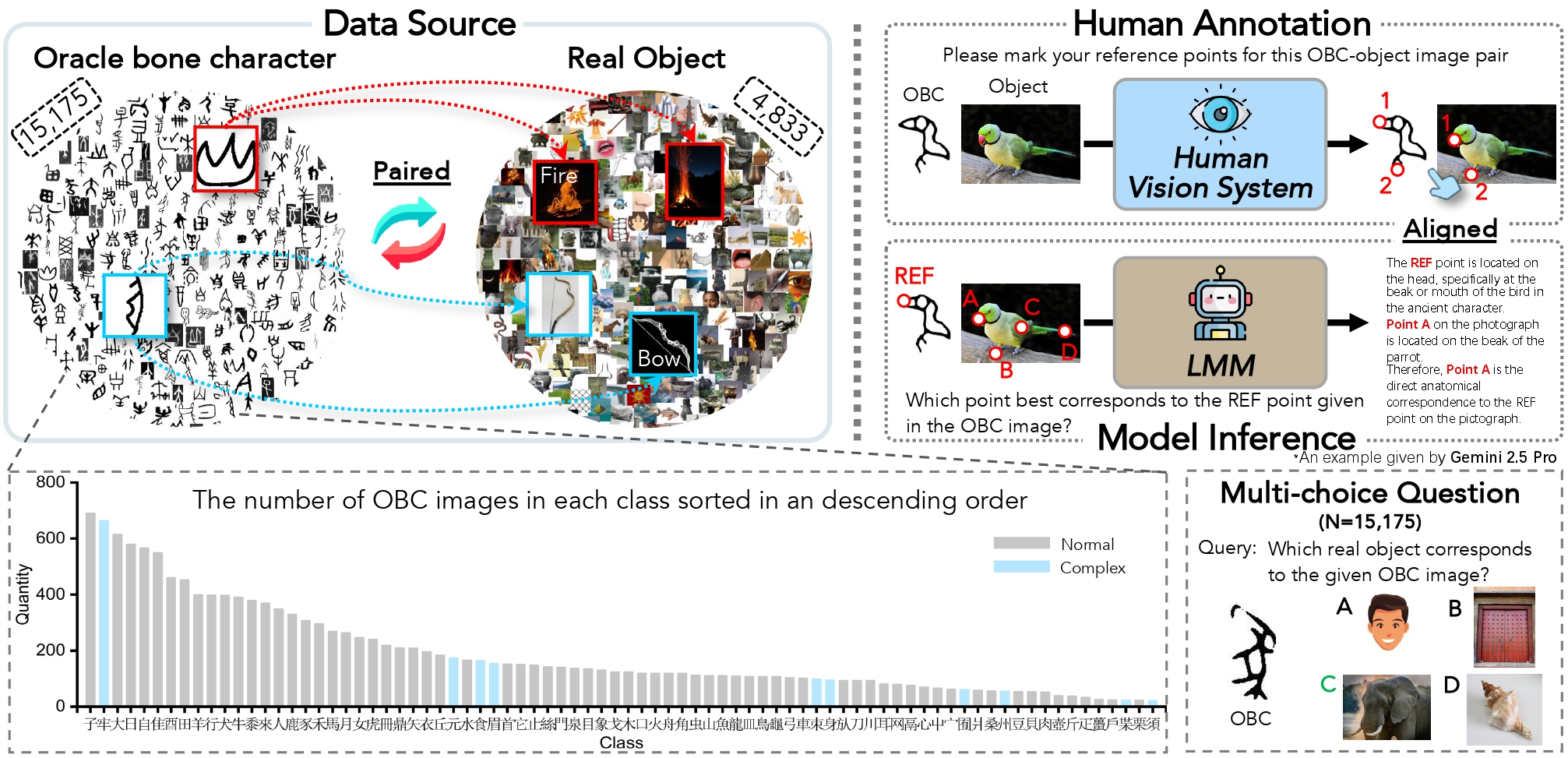
PictOBI-20k: Unveiling Large Multimodal Models in Visual Decipherment for Pictographic Oracle Bone CharactersICASSP, 2026.
In this paper, we introduce PictOBI-20k, a dataset designed to evaluate LMMs on the visual decipherment tasks of pictographic OBCs. It includes 20k meticulously collected OBC and real object images, forming over 15k multi-choice questions. We also conduct subjective annotations to investigate the consistency of the reference point between humans and LMMs in visual reasoning. |
|
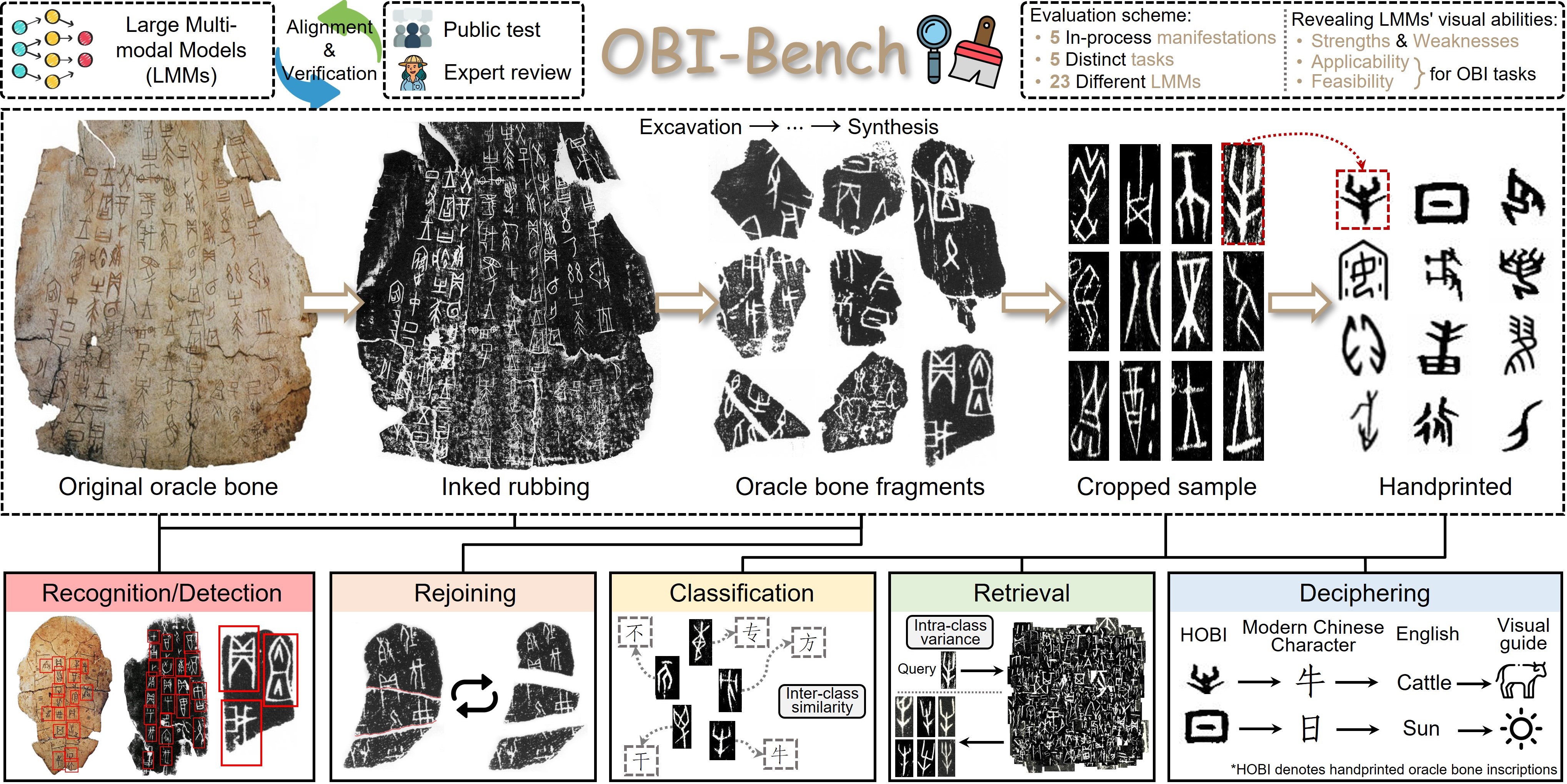
OBI-Bench: Can LMMs Aid in Study of Ancient Script on Oracle Bones?ICLR, 2025.
(NEW)
In this work, we introduce OBI-Bench, a holistic benchmark crafted to systematically evaluate large multi-modal models (LMMs) on whole-process oracle bone inscriptions (OBI) processing tasks demanding expert-level domain knowledge and deliberate cognition. |
|
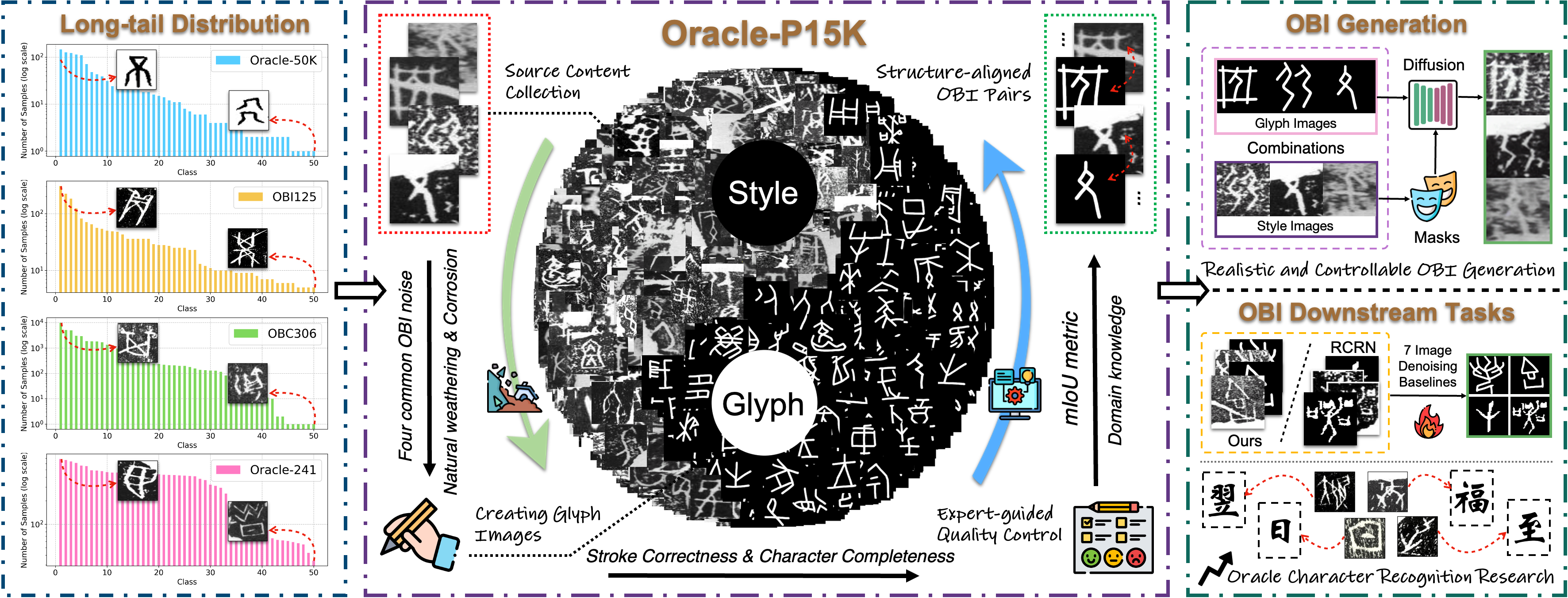
Mitigating Long-tail Distribution in Oracle Bone Inscriptions: Dataset, Model, and BenchmarkACM MM, 2025.
(Oral Recommendation)
In this paper, we present the Oracle-P15K, a structure-aligned OBI dataset for OBI generation and denoising, consisting of 14,542 images infused with domain knowledge from OBI experts. Based on this, we propose a diffusion model-based pseudo OBI generator, called OBIDiff, to achieve realistic and controllable OBI generation. |
|
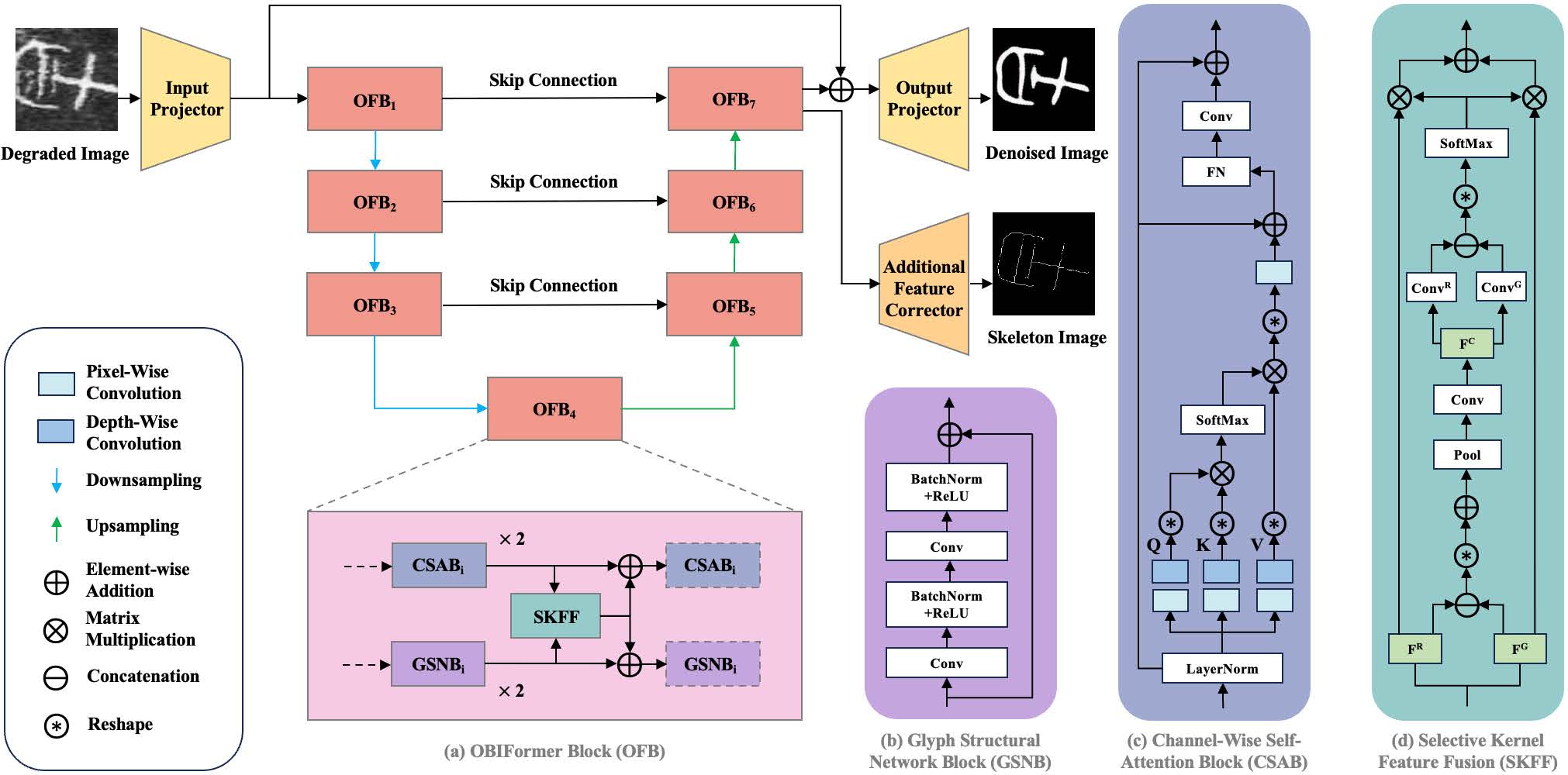
OBIFormer: A fast attentive denoising framework for oracle bone inscriptionsDisplays, 2025.
In this work, we propose OBIFormer, a fast attentive framework for high-precision Oracle bone inscriptions denoising. |
|
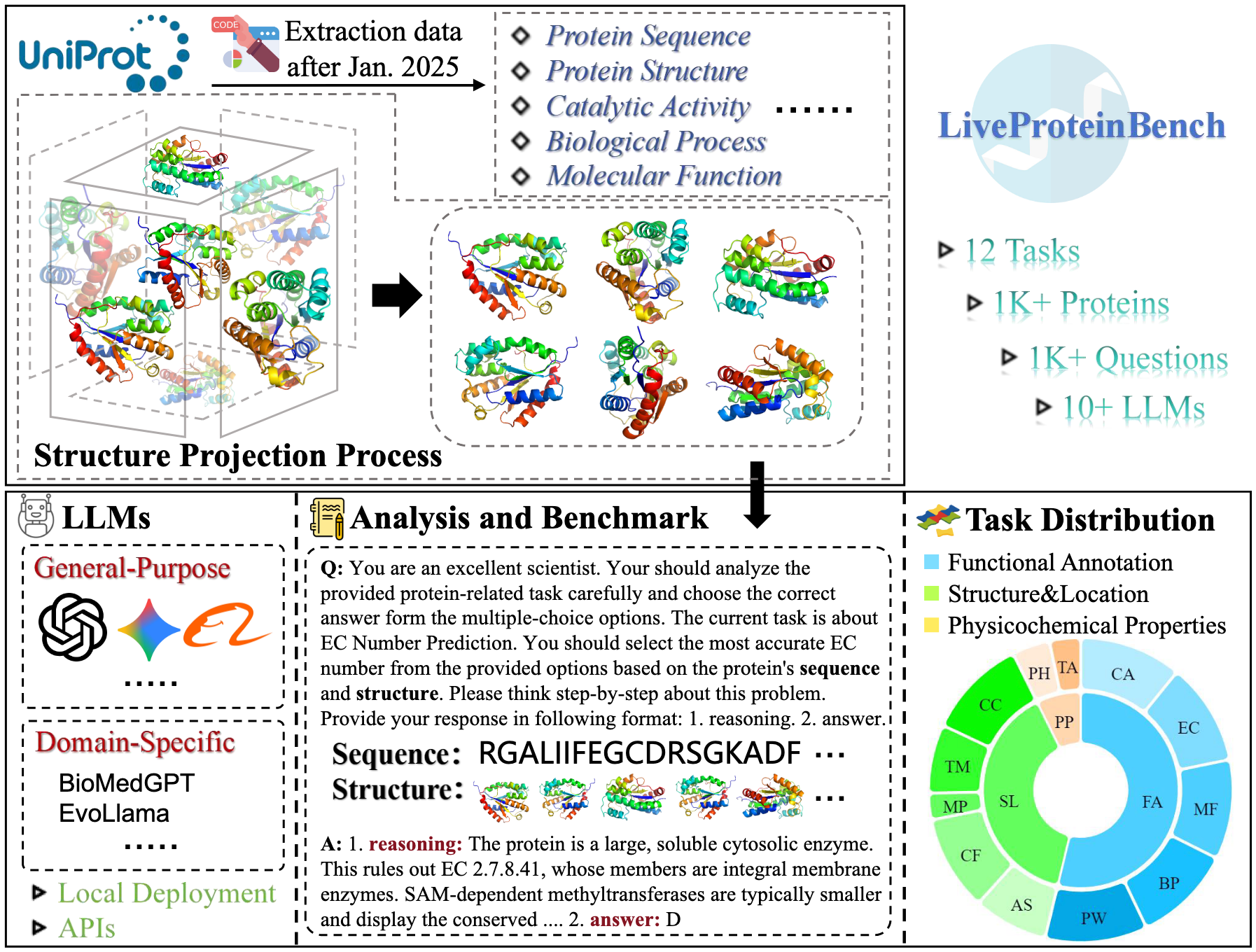
LiveProteinBench: A Contamination-Free Benchmark for Assessing Models' Specialized Capabilities in Protein SciencearXiv, 2025.
In this paper, we introduce LiveProteinBench, a contamination-free, multimodal benchmark of 12 tasks for evaluating LLM performance on protein property and function prediction. |
No publications in this category.
|
|
|
|
|
|
|
|
|
|
|

|
Updated in Apr. 2026 Thanks Jon Barron for this amazing website template. |